G20 Summit 2024: Global South and Sustainable Development Take Center Stage in Rio | (Wed 20 Nov 2024 19:44)
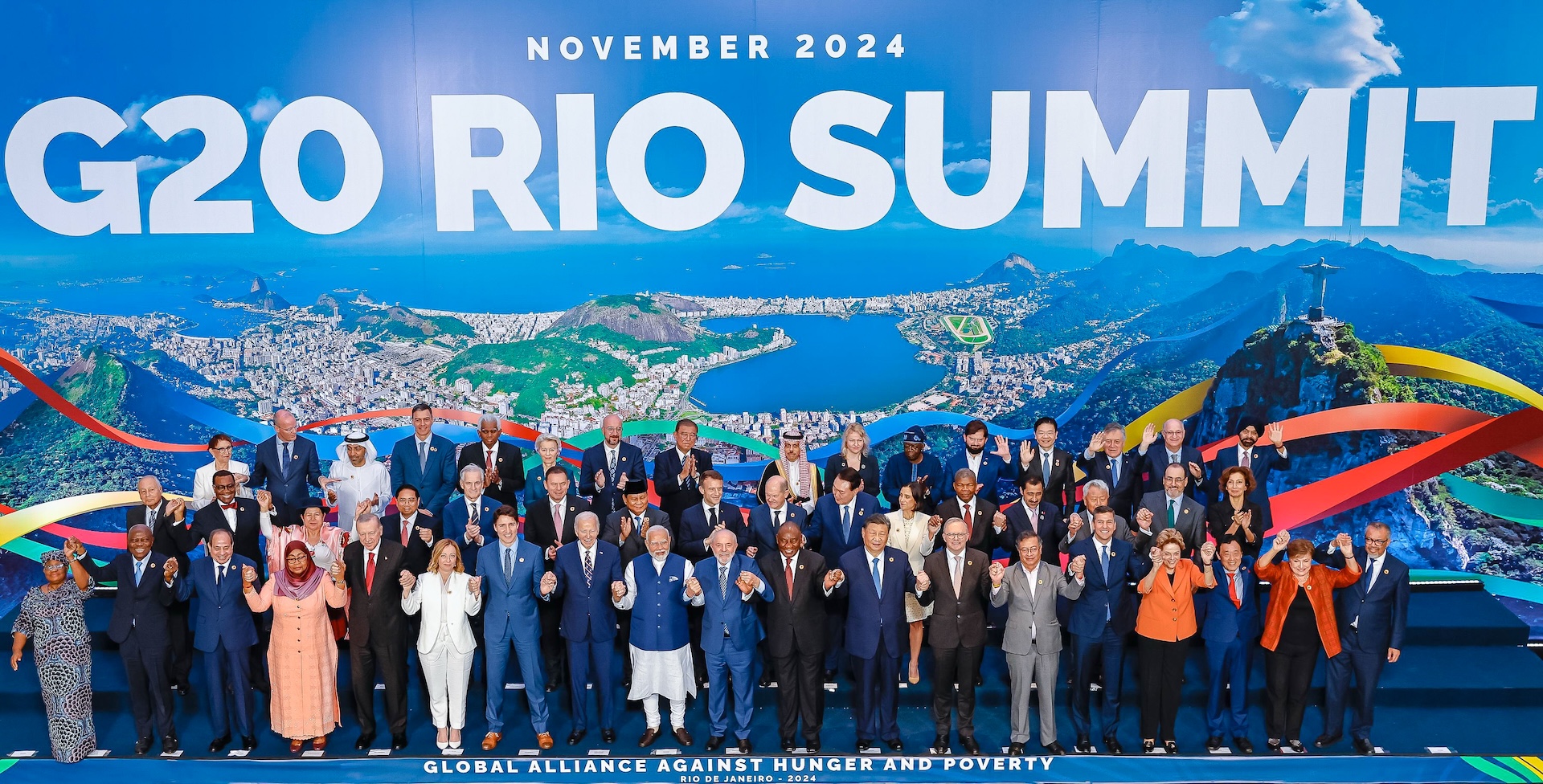
Leaders from the G20 gathered in Rio de Janeiro at the Modern Art Museum, with President Lula da Silva welcoming them. The summit, running until November 19, 2024, focuses on trade, climate change, and international security. U.S. policy changes under President-elect Donald Trump, including tariffs and a new approach to the war in Ukraine, add complexity to these discussions. Key leaders, including India's Prime Minister Narendra Modi, U.S. President Joe Biden, and China's President Xi Jinping, are attending discussions on critical global issues like trade, climate change, and international security. PM Modi addressed the summit’s opening session on ‘Social Inclusion and the Fight Against Hunger and Poverty’.
Geopolitical tensions, particularly over the conflicts in Gaza and Ukraine, challenge diplomatic efforts, with recent Russian airstrikes further complicating consensus. The U.S. has lifted restrictions on Ukraine’s use of American weapons against Russia, influencing the summit's discussions. President Biden is expected to announce a World Bank pledge for impoverished countries and launch a clean energy partnership with Brazil.
Brazil’s G20 agenda emphasizes sustainable development, poverty reduction, and taxing the super-rich, but Trump’s policies may undermine Brazil's global governance reform efforts. Trade discussions are influenced by the ongoing U.S.-China trade war, with Trump planning tariffs on Chinese imports, which could affect Brazil's push for taxing the wealthy.
Overview of G20:
The G20 is a forum of 19 countries and the European Union (EU) that was established in 1999. It was elevated to a Heads of State/Government forum in 2008 to address the global financial crisis. While G20 decisions do not have legal authority, they significantly influence global policies and cooperation.
Members:
The G20 includes Argentina, Australia, Brazil, Canada, China, France, Germany, India, Indonesia, Italy, Japan, Mexico, Russia, Saudi Arabia, South Africa, South Korea, Turkey, the UK, and the US. It also invites organizations like the United Nations and the World Bank to participate.
Aims and Objectives:
- Economic Stability: Foster global economic growth and financial stability.
- Sustainable Development: Promote climate change action and inclusive development.
- Crisis Management: Coordinate responses to global crises like financial collapses and pandemics.
- Global Collaboration: Strengthen multilateral trade, investment, and innovation.
- Inclusivity: Ensure the inclusion of both advanced and emerging economies, particularly the Global South.
Achievements:
- Financial Crisis (2008): G20 coordinated efforts to mitigate the global financial crisis.
- Paris Agreement (2015): Supported international climate change goals.
- Debt Relief (2020): Launched Debt Service Suspension Initiative to help vulnerable countries during the pandemic.
- COVID-19 Response: Committed $5 trillion to mitigate the pandemic’s economic impact.
- Digital Transformation (2023): India’s presidency focused on bridging the global digital divide.
Key Highlights of PM Modi’s Speech:
- Focus on SDGs: Modi praised Brazil’s emphasis on Sustainable Development Goals (SDGs) and concerns of the Global South, aligning with India’s G20 theme: "One Earth, One Family, One Future."
- India’s Achievements: Modi highlighted India’s success in alleviating poverty, providing food security to 800 million citizens, and implementing the world’s largest health insurance scheme benefiting 550 million people.
- Global Contributions: India’s support for food security in Africa was noted, and the country welcomed Brazil’s proposal for a 'Global Alliance Against Hunger and Poverty'.
- Support for the Global South: Modi emphasized the importance of addressing the crises related to food, fuel, and fertilizers, which have been exacerbated by global conflicts.
- Women-Led Development: He highlighted India’s initiatives for women’s empowerment in development and nutrition.
Key Issues at the Summit:
- Ukraine War: A joint statement on the war was difficult to finalize, with European leaders pushing for stronger language following a Russian airstrike. U.S. President Biden announced lifting restrictions on Ukraine's use of U.S. weapons in strikes on Russia.
- Brazil’s Agenda: Brazil’s focus was on sustainable development, taxation of the super-rich, poverty reduction, and reforming global financial institutions. However, these initiatives face opposition, particularly from the U.S. under President-elect Donald Trump.
- Climate and Energy: Biden pledged funds for the World Bank’s International Development Association and launched a clean energy partnership with Brazil. Meanwhile, Xi Jinping promoted China’s Belt and Road initiative, which Brazil has refused to join.
- Trade Tensions: The summit’s trade talks were overshadowed by concerns over escalating U.S.-China tensions and Trump’s planned tariffs. There was also resistance to proposals for taxing the super-rich, particularly from Argentina.
The G20 summit has set the stage for key discussions on global challenges, with the focus on multilateralism and collaboration for sustainable growth and security.

Physics, Chemistry, Biology and Geography.

Computer Programming, languages & their frameworks.
Economics, Accounts and Management.

Reviewing old and new books.

Ancient, Medieval, Modern, World History.
Indian Constitution, Politics, Policies, etc.

Everything related to International Affairs.

For all humanities topics, except History & Polity.

Anything related to entertainment industry.
Mainly Cricket but other sports too.
CS, IT, Services & Corporate Sector.
Comments
No comments yet. Be the first to comment!
Leave a Comment