India's Strategic Boost - The Rafale-M Deal and Its Impact on Naval Power | (Sun 08 Dec 2024 19:43)
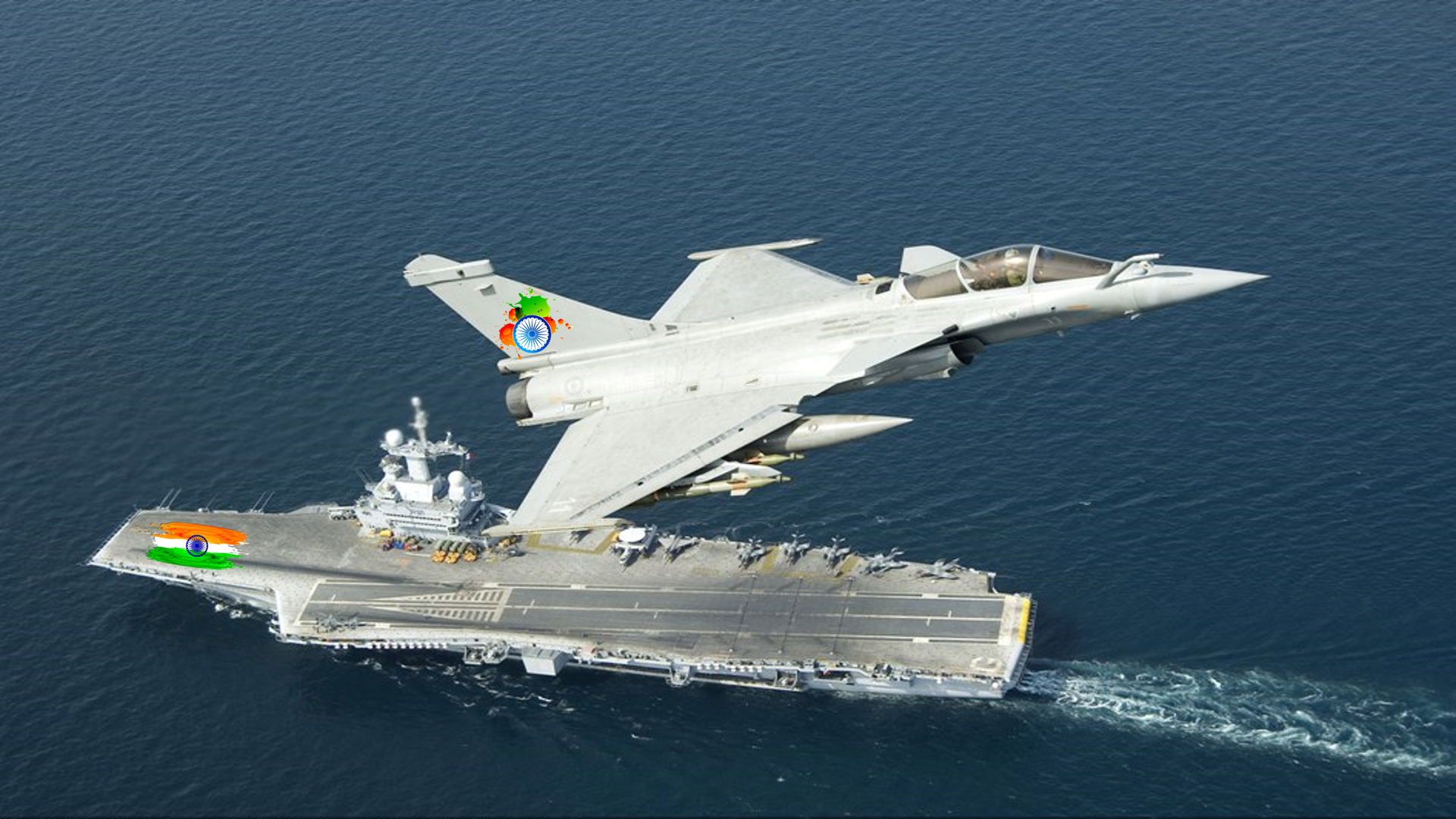
The Indian Navy is set to significantly bolster its power with the anticipated procurement of 26 naval variant Rafale-M fighter jets, a move that comes at a pivotal moment for India’s maritime strategy. Admiral Dinesh K. Tripathi, the Indian Navy Chief, shared this news during a media briefing in New Delhi just before Navy Day (4th December), underscoring that the deal is expected to be finalized by January 2025. This announcement has come on the heels of significant developments in the Indo-Pacific region, particularly involving China’s naval advances. The Indian Navy chose Dassault's Rafale-M over Boeing's F/A-18 Super Hornet after it outperformed its rival in meeting the Navy's operational criteria. The government is also working on developing its own Twin-Engine Deck-Based Fighter (TEDBF) for future carrier-based operations.
This deal’s timing is especially noteworthy. In late October, China’s People’s Liberation Army Navy (PLAN) undertook dual-carrier operations in the South China Sea involving the aircraft carriers Liaoning and Shandong. This exercise, reported by The War Zone, was a major display of PLAN’s growing capabilities and included modernized J-15B multirole fighters and the J-15D electronic warfare aircraft. Both variants showcased the PLAN’s progress in developing advanced carrier-based aircraft, capable of executing complex operations.
The J-15B is a marked upgrade from its predecessor, boasting features like an active electronically scanned array (AESA) radar and an improved cockpit. Although the new model still uses the Russian-made AL-31F engines in most instances, some aircraft have been tested with China’s own WS-10 turbofan engines. The J-15D, a two-seat electronic warfare jet\, is equipped with electronic warfare pods and additional sensors designed to disrupt enemy radar and communication systems. This step towards modernized carrier-based aviation is not just about having more planes; it's about creating a force capable of striking targets while maintaining electronic superiority.
The timing of India’s impending Rafale-M purchase is critical. The advanced Chinese naval aircraft, with their ability to operate from carriers like Liaoning and Shandong, not only strengthen China’s offensive capabilities but also enhance its strategic reach in the Indian Ocean. For India, a country with vast maritime interests and security concerns in this region, having a modern, capable naval air force is non-negotiable. Enter the Rafale-M, an aircraft that promises to be a game-changer for the Indian Navy.
The Rafale-M jets are being acquired for deployment primarily aboard India’s indigenous aircraft carrier, the INS Vikrant, as well as the Russian-built INS Vikramaditya. This new fleet of aircraft, valued at over ₹50,000 crore, will replace the aging MiG-29K fighters currently in service. While the MiG-29K is a capable aircraft\, the Rafale-M’s superiority lies in its enhanced capabilities, including its proven multi-role versatility and advanced avionics. The two variants of the French-made fighter jets (Rafale and Rafale-M) share more than 80 per cent of their components. Also, the training of Rafale pilots of the two services (IAF and IN) can be common to a great extent.
| Feature | Rafale Air Force | Rafale-Maritime |
| Airframe | Conventional airframe. | Reinforced for durable carrier landings. |
| Mission | Air dominance, ground strike, air refueling operations. | Naval operations. Heavier than Rafale-Maritime. |
| Radar | Basic radar. | Naval-optimized. |
| Wing | Can't fold. | Collapsible to fit in ships. |
| Weapons | Basic range of weapons. | Broader weapon options, including anti-ship missiles. |
| Tailhook | No. | Yes. |
The deal also signals India’s strategic foresight in maintaining compatibility between its air force and navy. The Indian Air Force (IAF) has already received 36 Rafale jets under a deal signed in 2016. The Rafale-M will share approximately 80% of its components with the IAF’s version, simplifying maintenance, training, and logistics. This commonality helps India cut costs over the long term, a crucial aspect given the defense budget's finite nature.
Manufactured by Dassault Aviation, the Rafale-M is part of the 4.5 generation of fighter jets, incorporating features that bring it close to fifth-generation capabilities. These include an AESA radar (optimized for maritime operations), advanced avionics, and a robust electronic warfare suite. The tailhook for arrested landings and reinforced undercarriage make it ideally suited for carrier-based operations, even if those carriers operate with a ski-jump takeoff system, like the INS Vikrant and INS Vikramaditya. Testing at INS Hansa in Goa confirmed the Rafale-M’s ski-jump launch ability, a key requirement for the Indian Navy’s operational context.
Dassault’s design team has ensured the Rafale-M can withstand the unique stresses of carrier landings, with an undercarriage designed to absorb these forces and foldable wings for efficient storage. The Indian Navy’s procurement of these jets demonstrates strategic insight: enhancing its air strike and defense capabilities just as the PLAN demonstrates increasing sophistication in carrier operations.
Moreover, the Rafale-M is also expected to serve as an interim solution until India’s homegrown Twin-Engine Deck-Based Fighter (TEDBF) is ready. The TEDBF’s prototype is expected to fly by 2026, with production slated to start in 2031. Until then\, the Rafale-M will fill the gap, ensuring that India’s carrier-based air power remains robust.
The deal comes as India is ramping up its naval power across multiple dimensions. Admiral Tripathi revealed that the Indian Navy is constructing 62 warships and a diesel-electric submarine, with more projects underway, including two nuclear-powered submarines expected to be ready by the mid-2030s. These additions signify a strategic shift: India is positioning itself as a dominant maritime power, capable of deterring potential adversaries in the Indo-Pacific and safeguarding its interests.
China’s military growth and the PLAN’s push into the Indian Ocean, including the construction of more sophisticated warships with Pakistani cooperation, heighten these security concerns. The PLAN’s regional maneuvers, such as deploying research and satellite tracking vessels, demonstrate a methodical approach to expanding its naval influence. India’s response to this challenge has been multi-faceted, encompassing new platforms and modernization programs.
The new Scorpene-class submarines, of which three more are planned, are a testament to India’s focus on enhancing its underwater capabilities. The Vagsheer, set to join the fleet, will be the sixth and final vessel under Project-75. These diesel-electric submarines will complement the INS Arighaat, India’s second Arihant-class nuclear-powered ballistic missile submarine, enhancing the country’s nuclear deterrence. The strategic balance in the region is further reinforced by the upcoming Aridaman and the fourth Arihant-class, codenamed S-4.
India’s investment in nuclear-powered submarines is a significant statement of intent. The aim is to deploy six such vessels, bolstering India’s nuclear triad—ensuring the ability to launch nuclear weapons from land, air, and sea. This strategic posture is essential to counterbalance China’s military advancements and Pakistan’s expanding navy.
The decision to procure Rafale-Ms and build more Scorpene-class submarines reflects India’s comprehensive approach to modernizing its military and safeguarding its maritime domain. While these moves may be seen as defensive in nature, they are also a declaration that India intends to uphold a rules-based international order in the Indian Ocean, a region increasingly influenced by China’s strategic objectives. The Indian Navy, under Admiral Tripathi’s guidance, appears poised to meet these challenges head-on, solidifying its role as a formidable force capable of protecting the nation’s interests on the high seas.

Physics, Chemistry, Biology and Geography.

Computer Programming, languages & their frameworks.
Economics, Accounts and Management.

Reviewing old and new books.

Ancient, Medieval, Modern, World History.
Indian Constitution, Politics, Policies, etc.
Everything related to International Affairs.

For all humanities topics, except History & Polity.

Anything related to entertainment industry.
Mainly Cricket but other sports too.
CS, IT, Services & Corporate Sector.
Comments
No comments yet. Be the first to comment!
Leave a Comment