The Isolated Guardians of North Sentinel - A Story of Survival and Resistance | (Tue 10 Dec 2024 20:18)
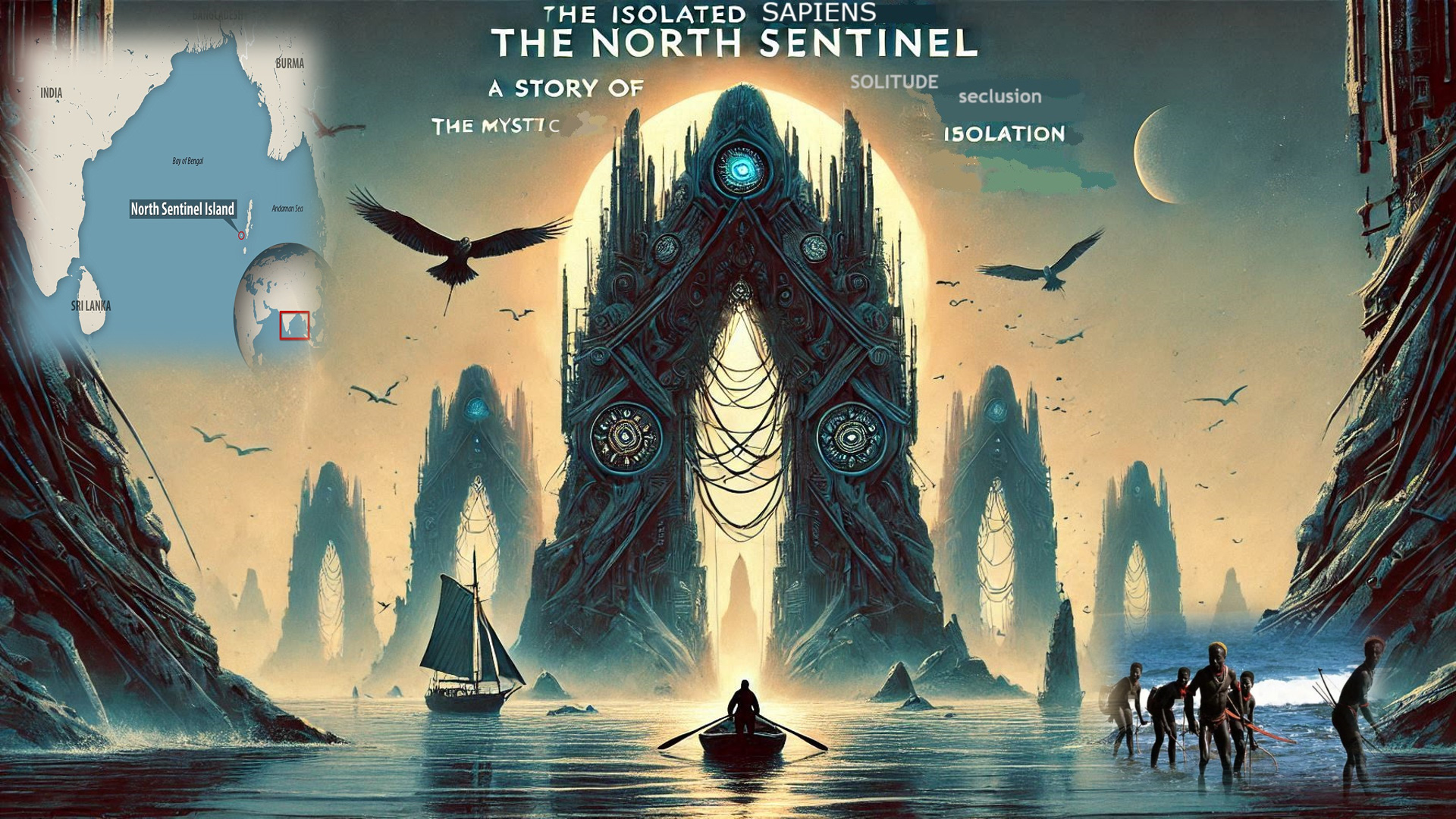
In the vast expanse of the Bay of Bengal lies an enigma shrouded in mystery and defiance: North Sentinel Island. A place where the dance of waves meets an ancient, unyielding humanity. It is home to the Sentinelese, a people whose rejection of modern civilization has rendered them one of the last "uncontacted" tribes in the world. Their story is one of survival, resistance, and an enduring commitment to self-determination.
The Arrival of the First Outsiders
The first recorded glimpse of the island’s mysterious inhabitants dates back to the late 18th century. In 1771, an East India Company vessel passed by the island, its crew spotting flickering lights along the shoreline. Yet the ship, on a survey mission, had no cause to stop. The lights dimmed into history, leaving the Sentinelese undisturbed for decades.
That fragile peace was shattered in 1867 when the Indian merchant vessel Nineveh ran aground on the island’s surrounding reef. Stranded for three days, the ship’s 106 survivors huddled on the beach. At first, the Sentinelese watched from the cover of the forest. Then, like shadows emerging into the light, they attacked with iron-tipped arrows and spears. The survivors were rescued by a Royal Navy ship, but not before the islanders left their mark on the intruders' memories—and bodies.
Colonial Intrusions and Retribution
In 1880, the British Empire's ever-reaching grasp extended to North Sentinel Island. Maurice Vidal Portman, a colonial officer with an anthropologist’s curiosity, led an expedition onto the island. The Sentinelese retreated into the dense forest, abandoning their villages. Portman’s team found lean-to huts, smoldering fires, and scattered tools but no inhabitants—at least, not initially.
Deeper into the jungle, Portman’s party captured an elderly couple and four children. They were whisked to Port Blair, the capital of the Andaman and Nicobar Islands. The elder captives succumbed to illness within days, and the terrified children, now sick, were returned to their home with gifts of cloth and trinkets. The trauma of this episode echoed in Sentinelese memory, hardening their stance against outsiders.
The Sentinelese Way of Life
Isolated by choice and geography, the Sentinelese live as hunter-gatherers, weaving a life in harmony with their island’s natural bounty. They forage for fruits and tubers, hunt wild pigs and birds, and harvest crabs from the shallow waters inside the coral reef. Using long poles, they navigate the calm lagoons in narrow, dugout canoes, never venturing far into the open ocean.
Their tools and weapons—spears, bows, arrows—are often tipped with iron, scavenged from shipwrecks and flotsam washed ashore. The wreck of the Primrose cargo ship in 1981 provided a veritable treasure trove of metal. Over time, the Sentinelese transformed the rusting hulk into a resource, its remnants absorbed into their self-reliant economy.
Huts with slanted roofs dot the island, grouped into small, familial clusters. Fires burn outside each home, carefully tended as symbols of life and resilience. Anthropologists have observed them weaving intricate mesh baskets and crafting wooden adzes tipped with scavenged metal. Despite this material creativity, their most striking tools are the ones they’ve used to enforce their isolation: weapons and unflinching resolve.
Attempts at Contact
In the 20th century, Indian anthropologists, led by T.N. Pandit, sought to bridge the chasm of silence between the Sentinelese and the outside world. Their method was simple yet fraught with tension: approach the island by boat, leave gifts of coconuts, cloth, and metal pots on the beach, and retreat before arrows flew.
At first, the Sentinelese responded with hostility, loosing arrows at the strange visitors. Over the years, however, their reactions softened—slightly. By 1991, the Sentinelese began cautiously collecting the offerings. In a rare moment of apparent trust, an unarmed group of Sentinelese ventured close to the anthropologists, gathering coconuts while women and children watched from the forest’s edge.
But the fragile détente was fleeting. Sentinelese hospitality had its limits, and when visitors overstayed their welcome, they were met with menacing gestures—or worse. Pandit himself once witnessed a Sentinelese man theatrically “bury” his bow and arrow, only to retrieve them moments later when he felt the outsiders lingered too long.
Modern Intrusions and Tragedy
The island’s defiance of modernity has not gone uncontested. In 2006, two Indian fishermen, asleep in their boat, drifted onto Sentinelese shores. They were killed swiftly, their remains buried in the sand. This incident reaffirmed the Sentinelese’s fierce independence, warning off even the most curious or careless intruders.
In 2018, American missionary John Allen Chau attempted to convert the Sentinelese to Christianity. Ignoring both Indian law and the tribe’s well-documented hostility to outsiders, he hired local fishermen to ferry him close to the island. Over two days, he tried to approach the Sentinelese, singing hymns and preaching. Each time, they repelled him. On his third attempt, they killed him. His body was never recovered.
Legal Protections and Ethical Dilemmas
Recognizing the Sentinelese's vulnerability, the Indian government has enacted stringent protections. The Andaman and Nicobar Islands (Protection of Aboriginal Tribes) Regulation, 1956, prohibits unauthorized entry to the island. Even photographing the Sentinelese is a criminal offense. These laws aim to shield the tribe from exploitation and disease, which could decimate their uncontacted population.
Yet debates persist about how to engage with the Sentinelese. Some anthropologists advocate for controlled, respectful contact to build trust and provide medical aid if needed. Others, like Pandit, argue for complete non-intervention, letting the Sentinelese live as they have for millennia.
A Glimpse Into Their World
Despite their isolation, the Sentinelese remain a part of the larger Andamanese story. Genetic studies suggest they share ancestry with other indigenous groups, like the Onge and Jarawa. However, centuries of isolation have rendered their language incomprehensible to their nearest neighbors.
Anthropologists have tried to piece together their way of life from a distance. Bonfires seen from passing ships suggest communal gatherings. Songs heard drifting over the waves hint at cultural rituals. Even their aggressive displays—aimed arrows, theatrical gestures—may carry layers of meaning outsiders can only guess at.
The Future of the Sentinelese
As the modern world encroaches on even the remotest corners of the Earth, the Sentinelese stand as a living testament to an older way of being. Their island, ringed by coral reefs and thick forest, is not just a physical refuge but a bastion of cultural sovereignty.
The Sentinelese do not need electricity, smartphones, or social media. They do not seek the trappings of modernity. Instead, they guard something far more precious: their autonomy.
As debates swirl about the ethical implications of contact, the world must reckon with a fundamental question: Do we have the right to impose our way of life on those who reject it?
The Sentinelese remind us of humanity’s diversity and resilience. They offer a glimpse into a life unpolluted by modernity, shaped instead by the rhythms of nature and the bonds of community. To respect their wishes is not just an ethical imperative—it is a recognition of their right to exist on their terms, as guardians of a timeless legacy.
In the end, the Sentinelese story is not just about isolation; it is about choice. Their refusal to embrace the outside world is not ignorance but a deliberate act of self-preservation. In their silence, they speak volumes about what it means to be free.

Physics, Chemistry, Biology and Geography.

Computer Programming, languages & their frameworks.

Economics, Accounts and Management.

Reviewing old and new books.

Ancient, Medieval, Modern, World History.

Indian Constitution, Politics, Policies, etc.

Everything related to International Affairs.

For all humanities topics, except History & Polity.

Anything related to entertainment industry.

Mainly Cricket but other sports too.

CS, IT, Services & Corporate Sector.
Comments
No comments yet. Be the first to comment!
Leave a Comment