Shubhanshu Shukla’s Stellar Journey of Axiom-4: A Milestone for India in Space | (Sat 19 Jul 2025 20:25)
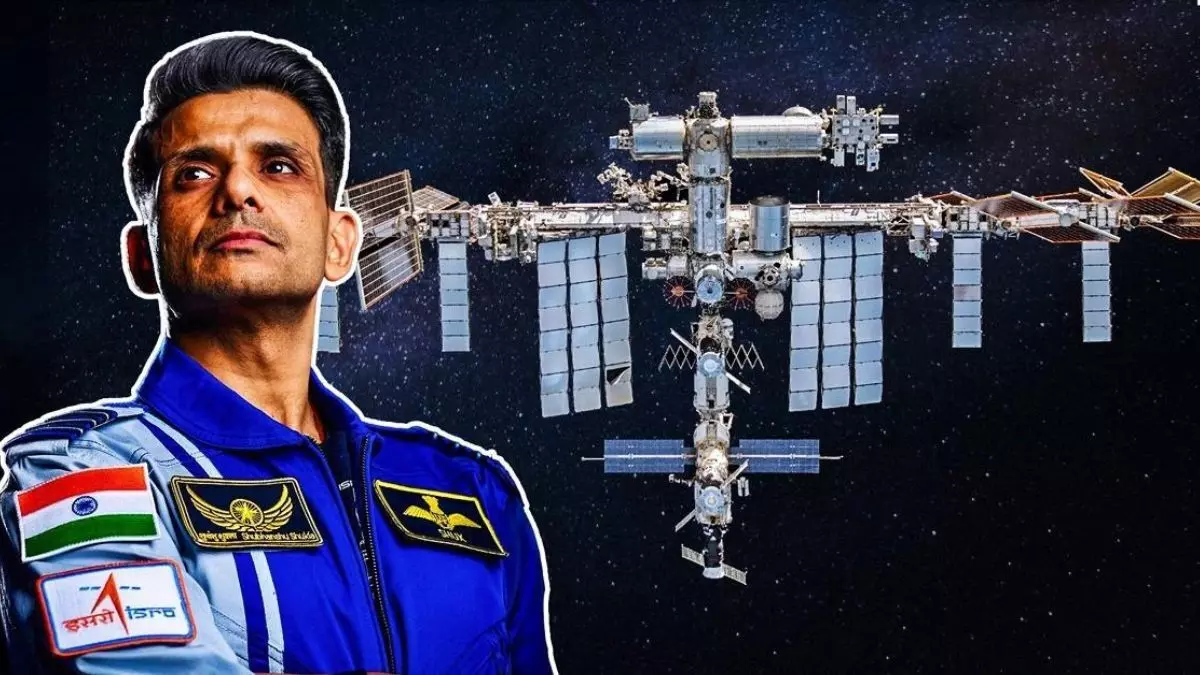
Shukla became the first ISRO astronaut to visit the ISS and the second Indian in space after Rakesh Sharma (1984). His seat, costing around $60 million (₹500 crore), was funded by the Indian government in 2025.
On July 15, 2025, the Pacific Ocean off the coast of California bore witness to a historic moment as the SpaceX Dragon spacecraft, named Grace, gently splashed down, carrying Indian astronaut Group Captain Shubhanshu Shukla and his Axiom-4 crewmates back to Earth. After an 18-day mission aboard the International Space Station (ISS), Shukla, the first Indian to visit the orbital outpost and only the second Indian to venture into space after Rakesh Sharma in 1984, marked a new chapter in India’s space ambitions. His journey, part of the Axiom-4 mission, dubbed Akash Ganga, was not just a personal triumph but a monumental step for India’s burgeoning role in global space exploration.
Born on October 10, 1985, in Lucknow, Shukla joined the Indian Air Force as a fighter pilot in 2006, amassing over 2,000 hours of flight experience on aircraft like the MiG, Sukhoi, Jaguar, and Hawk. Selected in 2019 as one of four astronauts for India’s Gaganyaan program, Shukla’s path to the stars was paved with rigorous training and an unyielding passion for exploration. Reflecting on his journey before the mission, he described the past year as “nothing short of transformative,” carrying “the hopes and dreams of a billion hearts” as he boarded the Grace capsule on June 25, 2025, from NASA’s Kennedy Space Center in Florida.
The Axiom-4 mission, a collaboration between Axiom Space, NASA, the Indian Space Research Organisation (ISRO), and the European Space Agency (ESA), launched aboard a SpaceX Falcon 9 rocket. Shukla was joined by mission commander Peggy Whitson, a veteran U.S. astronaut, Slawosz Uznanski-Wisniewski from Poland, and Tibor Kapu from Hungary, marking historic firsts for Poland and Hungary as their first astronauts reached the ISS. The crew docked with the ISS on June 26, welcomed by a rotating crew of three U.S. astronauts, one Japanese crewmember, and three Russian cosmonauts.
During his 18-day stay, Shukla orbited Earth 288 times, covering an estimated 13 million kilometers—roughly 33 times the distance between Earth and the Moon—and witnessed over 300 sunrises and sunsets. From the ISS’s seven-windowed Cupola Module, he marveled at Earth’s beauty, describing it as a “blue marble” where “the oceans are huge, and sometimes we would pass an entire duration of day (45 minutes) without seeing land.” His Instagram post captured the awe of seeing a fearless, ambitious, and proud India from space, echoing Rakesh Sharma’s iconic 1984 remark that India looked “better than the rest of the world.”
Shukla’s mission was not just about soaking in the cosmic view; it was a scientific odyssey. He completed seven India-specific microgravity experiments, designed by ISRO, alongside over 60 collaborative studies with his crewmates. These experiments, ranging from studying tardigrades to cultivating seeds, aimed to generate critical data for future planetary missions and long-duration space habitation. One of the standout experiments involved the Indian strain of tardigrades, microscopic “water bears” known for surviving extreme conditions, from temperatures of -272.95°C to 150°C, to the vacuum of space. Shukla’s research focused on identifying the genes behind their resilience, offering insights into sustaining life in harsh space environments.
Another key experiment explored space microalgae, testing their potential to produce food, oxygen, and biofuels in microgravity. Shukla’s centrifugation of cyanobacteria compared two strains to understand their growth and biochemical activity, with findings that could support sustainable carbon and nitrogen recycling systems for long-duration missions. The Sprouts project saw Shukla germinate methi and moong seeds, subjecting them to -80°C to study microgravity’s impact on their development. Back on Earth, these seeds will be cultivated to observe changes in genetics, microbial ecosystems, and nutritional profiles, aiming to develop plants for sustainable space farming.
Shukla’s Myogenesis study delved into muscle cell behavior in microgravity, with potential applications for treating muscle-wasting diseases and age-related immobility on Earth. Using the Life Sciences Glovebox, he investigated muscle atrophy, while other experiments measured radiation exposure with the Rad Nano Dosimeter and assessed mental and cardiac health during prolonged spaceflight. Shukla also conducted neuromuscular electrical stimulation sessions to explore combating muscle loss and contributed to seed resilience trials with rice, cowpea, sesame, brinjal, and tomato seeds to advance space agriculture and develop climate-resilient crops.
The Voyager Display experiment, designed by the Indian Institute of Science (IISc) in Bengaluru, examined human interaction with electronic displays in microgravity, assessing whether screen use increases astronaut stress or fatigue. These experiments, part of a broader suite of 60 studies, underscored India’s growing contribution to space research. ISRO plans to consolidate the data into technical reports and peer-reviewed journals, establishing a knowledge repository to bolster future missions like Gaganyaan, India’s first crewed spaceflight set for 2027, and the proposed Bhartiya Antariksha Station by 2035.
The Grace capsule’s return journey began on July 14, when the crew boarded at 3:30 a.m. CT (2:00 p.m. IST), undocking from the ISS at 4:45 p.m. IST. The 22.5-hour trip culminated in a splashdown at 3:01 p.m. IST on July 15, announced by a brief sonic boom. The ocean landing was chosen for its cushioning effect, as water’s low viscosity and high density absorb the spacecraft’s 25-30 km/h deceleration, minimizing risks compared to ground landings. A vessel retrieved the capsule, and the crew was airlifted by helicopter to begin a seven-day rehabilitation program to readjust to Earth’s gravity. This reconditioning addresses symptoms like motion control issues, inner ear recalibration, and strength recovery, preparing astronauts for post-mission activities.
Prime Minister Narendra Modi hailed Shukla’s mission as a “historic milestone,” noting that it “marks another milestone towards our own Human Space Flight Mission – Gaganyaan.” Union Minister Dr. Jitendra Singh called it a “moment of pride for the world, a moment of glory” for India, emphasizing that the mission’s novel experiments signal India’s rightful place in the global space ecosystem. ISRO celebrated the mission’s success, with Shukla’s completion of all planned experiments reinforcing India’s space ambitions.
In his farewell address from the ISS, Shukla reflected on the challenges and aspirations of India’s space journey, saying, “The journey of our human space mission is very long and difficult. But if we are determined, even the stars are attainable.” Quoting Rakesh Sharma’s iconic line, he added, “Today’s India looks ambitious. It looks fearless. It looks confident. It looks proud.” His words resonated deeply, capturing the spirit of a nation poised for greater cosmic achievements.
Shukla’s return marks the 18th human spaceflight by SpaceX since 2020, a testament to the growing role of private companies like Axiom Space in space exploration. ISRO’s investment of 5 billion rupees ($59 million) secured Shukla’s seat and training, providing hands-on experience critical for Gaganyaan. The mission’s success has set the stage for ceremonial recognitions by the Government of India, ISRO, and the Indian Air Force, with events planned after Shukla’s return to India around August 17, following quarantine and debriefings with Axiom Space and NASA.
As Shukla undergoes re-adaptation, his contributions continue to inspire. The data from his experiments will fuel India’s ambitions to send astronauts to the Moon by 2040 and establish a space station by 2035. Group Captain Shubhanshu Shukla’s Akash Ganga mission has not only elevated India’s stature in space but also ignited a billion dreams, proving that with determination, the stars are indeed within reach.
Physics, Chemistry, Biology and Geography.

Computer Programming, languages & their frameworks.
Economics, Accounts and Management.

Reviewing old and new books.

Ancient, Medieval, Modern, World History.
Indian Constitution, Politics, Policies, etc.

Everything related to International Affairs.
For all humanities topics, except History & Polity.

Anything related to entertainment industry.
Mainly Cricket but other sports too.
CS, IT, Services & Corporate Sector.
Comments
No comments yet. Be the first to comment!
Leave a Comment